PGY-4 OMFS Resident Texas A&M Oral and Maxillofacial Surgery Keller, Texas, United States
Disclosure(s):
Parker Green, DDS, MD: No financial relationships to disclose
Abstract:
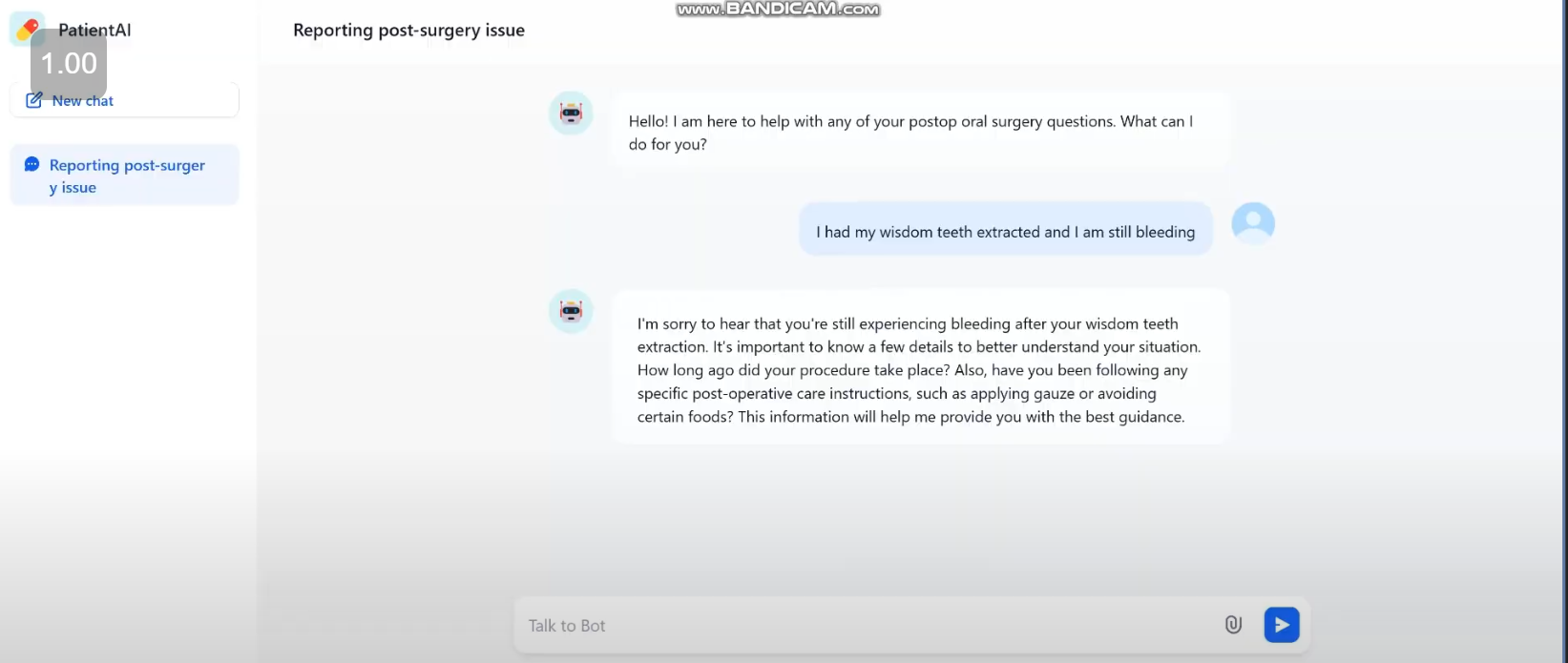
Background: Postoperative care is a critical component of successful outcomes in oral and maxillofacial surgery as well as patient satisfaction. However, patients often have questions or concerns after office hours, leading to uncertainty about their recovery. To address this, I developed an AI agent designed to interact with patients following surgery, providing accurate, evidence-based responses to common postoperative queries. The Agent is meant to assist patients in understanding expected recovery milestones surrounding topics such as bleeding, pain, swelling, and medication use, while identifying more concerning symptoms that warrant immediate surgeon attention. Current efforts are meant to demonstrate this Agent as a minimum viable product; further research will be needed to test its real-world efficacy.
Methods: The Agent was trained using a combination of existing natural language processing frameworks and a curated dataset comprising clinical guidelines and postoperative care protocols for various oral and maxillofacial surgical procedures. Iterative prompt engineering was performed to ensure the model could accurately interpret patient inputs, provide empathetic, contextually appropriate responses, and identify questions and complaints that warranted attention from the surgeon. The training process involved repeated testing and validation with simulated patient interactions and feedback from oral and maxillofacial surgeons to refine the model’s accuracy and reliability.
Results: Preliminary testing demonstrated that the Agent effectively addressed patient concerns, providing clear and accurate guidance on routine postoperative issues. It successfully identified cases requiring surgeon intervention, with a high degree of precision in distinguishing between expected recovery symptoms and potential complications.
Conclusions: The Agent represents a promising tool for improving postoperative care in oral and maxillofacial surgery. By providing patients with accessible, accurate information and enabling timely surgeon intervention when needed, the model has the potential to reduce patient anxiety, improve outcomes, and streamline postoperative communication. Future work will focus on expanding the dataset, refining the model’s capabilities, and gathering patient satisfaction and efficacy data from real-world use. Screenshot from simulated patient interaction